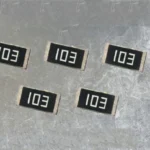
A capacitor is a circuit element consisting of two metal plates separated by an insulating dielectric. Its unit is the farad, symbol F. A capacitor stores energy in the electric field between two conductors; the two conductors carry equal and opposite charges.
Principle. A capacitor has two electrodes that store equal and opposite charges. The electrodes themselves are conductors, separated by an insulator (dielectric). The plates are usually made of aluminum sheet or aluminum foil; when aluminum oxide serves as the dielectric, it is an electrolytic capacitor. Charge is stored on the electrode surfaces near the dielectric. Because the two electrodes hold equal and opposite charges, the capacitor remains electrically neutral overall.
Under the influence of the electric field, dielectric molecules rotate and produce a reverse electric field, which partially cancels the original field. This effect is called polarization.